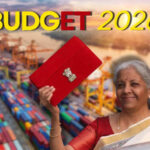


The provided HTML content is primarily centered around Budget 2026 expectations, specifically focusing on income tax from a middle-class taxpayer’s perspective in India. The news articles list at the end is not part of the core article content. Below is the rewritten version of the main article (Budget 2026 Tax Expectations) presented in a new, engaging, and story-telling format, matching the original length and information.
Budget 2026: Will the Middle Class Get a Big Tax Upgrade? Decoding the Expectations!
India
oi-Puja Yadav
Published: Wednesday, January 21, 2026, 14:19 [IST]
Budget 2026 Expectations: As the calendar flips to February, the nation’s eyes are glued to a single document—the Union Budget 2026. When Finance Minister Nirmala Sitharaman takes the floor in Parliament, the attention of millions of taxpayers won’t be wandering. It will be laser-focused on just one page: the “Income Tax Relief” slide. Will history repeat itself, or is a new chapter of financial freedom about to unfold for the common man?
In the Budget 2025, the government set a new benchmark for relief by making income up to ₹12 lakh (effectively ₹12.75 lakh with standard deduction) tax-free under the new tax regime. This move was hailed as a massive sigh of relief for the salaried class. Now, the burning question is: will the Finance Minister maintain this momentum of relief, or will fiscal constraints bring the “speed of relaxation” to a screeching halt?
Budget 2026 Tax Changes: The Great Regime Debate
For the past few years, the government has aggressively pushed the ‘New Tax Regime’, making it the default option. It pitched a cleaner, simpler structure—lower rates but no deductions. However, the “Old Tax Regime” still has millions of loyalists. These taxpayers, now a formidable voting bloc, feel left behind. Industry bodies and tax experts argue that the government cannot ignore the cries of those who still rely on the old system’s intricate web of deductions. The silence around Section 80C must end, they say, as the dry spell of benefits needs to break.
Under the old regime, Section 80C has been capped at ₹1.5 lakh for years. With inflation eroding purchasing power, there is a massive demand to double this limit to ₹3 lakh to make savings and investments truly attractive. Furthermore, with medical costs spiraling and insurance premiums skyrocketing, the Section 8D limit of ₹25,000 feels woefully inadequate. Experts are calling for an ‘essential’ hike to ₹50,000, ensuring that health security doesn’t come at the cost of a heavy tax burden.
Budget 2026 Expectations: The ₹6 Lakh Benchmark Looms Large
To make the New Tax Regime truly irresistible, the government might not stop at ₹12 lakh. The focus is now shifting to the ‘Basic Exemption Limit’. Currently, the first ₹4 lakh of income is tax-free. However, whispers in the corridors of power suggest a massive leap forward. Tax pundits predict the basic slab could be raised to anywhere between ₹5 lakh and ₹6 lakh. If this happens, individuals earning up to ₹6 lakh could breathe easy, paying zero taxes even without relying heavily on deductions.
Last year’s ₹12 lakh tax-free promise changed the game. Now, the anticipation is high for further slab restructuring that protects the middle class earning up to ₹15 lakh from falling into a higher tax net, thereby increasing their disposable income.
Budget 2026 is shaping up to be a fiscal tightrope walk for the government. On one side is the rising expectation of the *aam aadmi* (common man) to boost consumption through reduced tax rates. On the other is the challenge of maintaining fiscal discipline and managing the deficit. The question haunting every taxpayer’s mind is simple yet profound: “Will the Finance Minister pull a rabbit out of the hat again, boosting the purchasing power of the middle class, or will global economic uncertainties force a pause on the ‘relief’ speed train?”
Policy Review: The Road to 2047
Experts believe this budget will transcend mere numbers. It is expected to paint a clearer picture of the ‘Viksit Bharat 2047’ roadmap. The government’s narrative is shifting from a maze of deductions to a “simple and low rate” system. The goal is transparency and ease of computing.
The implementation of the new Income Tax Act 2025, set to roll out from April 1, 2026, is the centerpiece of this strategy. It promises to overhaul the legal framework that has existed since 1961. All eyes are on whether the Finance Minister will deliver another “surprise.” If the government aims to spike consumption, enhancing the purchasing power of the salaried middle class through tax slab adjustments remains the most effective lever to pull.
As February approaches, the tension is palpable. Will the new tax law bring a tax tsunami, washing away old burdens, or will it be a gentle ripple? The answer awaits the opening of the budget box.
Discover more from Aware Media News - Hindi News, Breaking News & Latest Updates
Subscribe to get the latest posts sent to your email.